
Stray animals deserve to be seen-a service learning story

This Thursday, while most students are in classrooms spending their regular day at school, a small group of volunteers from my school hopped on the van taking them to Barb’s cat rescue. This activity was among one out of more than 15 social services my school collaborates with for the annual tradition of service learning day. As a member of my school's Animal Rescue Club, I joined them for my fourth visit to the shelter.
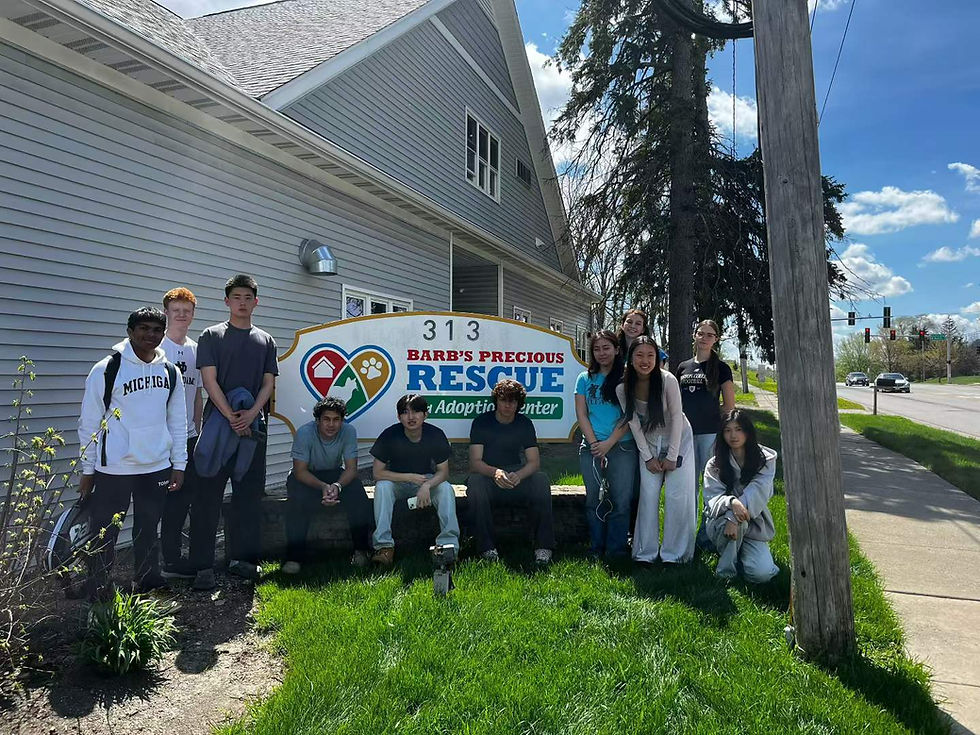
Our tasks were clear: clean the kitten room and help with feeding. Even though most of the cats were all rescued from bad conditions, most of them did not show any defense or fear. The shelter’s dedicated care and the combined effort of countless volunteers undeniably helped significantly in building their trust towards humans despite previous sufferings of prolonged
neglect and abuse.
For me, however, the morning meant much more than a sole mandatory service learning activity
In fact, I have been actively participating in stray animal advocacy since I was six years old. My commitments to animals all began with two dogs I adopted from the streets. They were both abandoned, having disabilities, unable to bend their back legs. For over nine years they witnessed my own growth, my dogs were my first teachers in the language of trust, loyalty, and vulnerability. Moreover, they taught me that animals are not property but companions
—— beings capable of joy, fear, pain, and love.
As I got closer to them, I realized that there were also many stray cats in my own neighborhood that relied on searching in trash cans for survival while having nowhere to settle as home. They struggled from frequent illness due to their poor living conditions and uncontrollable reproduction. That is when little me truly felt the sincere wish to do something.
Since then, I have fed those cats. I took sick ones to veterinarians and distributed blankets during winter months. Slowly, our relationship formed. Those that once fled began to remain. I clearly remember that the bonds were not always natural. Some of them were really skeptical of my friendliness in the beginning. Whenever I tried to approach or pet them, they would release their sharp claws and hissed aggressively.
I never gave up assuring them that I was no threat. For some, I spent a few months. For the others, even a few years. It was because I knew their past traumas, and I genuinely understood. As they grew up with me, our bond taught me something fundamental: Extending care to stray animals is not a minor act of sentiment or impulsiveness. It is a recognition of shared existence
and requires time, patience, and love.
Three years ago, my dogs were poisoned.
Losing them was a violent rupture. In the aftermath, I never cried for once. For a long time I thought that I didn’t actually care. But I still dream of them once in a while, recalling all the laughter they brought from my childhood to my adolescence. Grief constructed my determination in doing even more. I wanted to earn back the fair treatments of stray animals which they deserve.
I paid more attention to what can actually make people aware. I delivered speeches on animal welfare, joined charitable organizations that provide free sterilization surgeries, and ensured that stray animals in my community have blankets against winter cold. Volunteering at Barb's Cat Rescue through my school's Animal Rescue Club in a foreign country was not a temporary shift
from that persistence. It is an extension.
Standing in that kitten room at Barb's, surrounded by cats who once had no one, I realized that effort can make a difference. Service learning does not exist to teach students how to help. Many of us already know. Instead it translates for students that It takes the compassion we build in our own backyards to promote on a larger scale. I felt really grateful for this opportunity, recognizing that compassion can be multiplied to make a difference.


